Gaming

Jeepers Creepers

A creature for old school game systems (and others with a bit of tweaking) – inspired heavily by the explosive bastards from Minecraft

Description
These shambling humanoids are composed of vegetable matter and exhibit a basic level of sentience. They have no language, no culture, they are effectively a means for the species to propogate itself. Originally encountered within the Minecraft game these silent and explosive monsters are a threat to anyone who ventures into the dark places of the world. Creepers are roughly human sized and human shaped (understandably given their origin- see below) but they are comprised entirely of a mottled green-brown fungal substance. Their bodies lack definition and fine detail, with lumpy misshapen faces and hands like they have been badly formed by a lazy worker in clay. Amid the fungal masses that make up the body are black specks with short sharp cactus like spines emerging from them. These are the spores that are disseminated by the creature to propagate its species. In many ways the Spores are the monster – the Creeper is just the delivery mechanism.
They do not speak, they do not think, they have no society. They live like moss or slime or fungus in dark damp places and become active only when a humanoid being moves, or speaks within a couple of hundred feet of it. Then they stir and move and seek to draw near to them… And once near enough they explode and shower their targets with the Spores.

Creepers

Shambling vegetative humanoids


  • Armor Class 12
  • Hit Dice 3 (20)
  • Speed 60ft
  • Morale 12

Attacks. None normal
Stealth Surprises a foe on a 1-4 on d6. If the foe is not surprised they are alerted to the Creeper’s presence by a soft hissing sound if it is within Close combat range.
Explosion Every round the Creeper is in close combat range with a human foe roll 1d6. On a roll equal to or less than the number of rounds they have been within close combat range they explode.
Everyone in close combat distance takes 2d6 damage and must make an immediate save versus poison or be infected with the flying spores (non-humans save at +2). The Creeper is killed by its own explosion of course.
Spore Infection If a character caught in a Creeper explosion fails its Save v Poison then spores from the creature have pierced the character’s skin and taken root there. Each day thereafter the character will lose 1 point each in Wisdom and Intelligence.
When either of these attributes drops below three the character will lapse into a stupor and over the course of the next 1d4 hours transform into a Creeper and will seek out the nearest humanoid target. If a character receives a Heal spell during the process of losing Intelligence and Wisdom the transformation is halted.
If an infected character is killed while infected (including by the original explosion of the Creeper) the transformation is hastened, and occurs the very next day.


Tactics

Creepers tend to remain silent and relatively dormant until they sense a potential host for their spores. If they detect a human or other sentient humanoid creature they will start to wander until the target’s exact whereabouts is determnined at which point the Creeper will move directly and stealthily toward them, intending to explode and shower them in spores.
A Creeper cannot really tell the difference between humanoids but while anyone of any species can be damaged by a Creeper explosion, species other than humans save versus Spore Infection at +2 since the Spores have evolved with humans as their preferred medium for growth.

PDF available here

If you feel like taking a look at my first novel, a reality-jumping Cyberpunk Regency mystery with a kick-ass heroine then check out A Step Beyond Context available on Kindle for less than $3.00 and in paperback for less than $10.00.  It’s really good, honest, and gameable as hell. 
Gaming

Star Stones of Atar

A capsule setting for fantasy gaming

The land of Atar is a land beset on every side by the forces of chaos and wildness. Lawless men and creatures from out of nightmare roam the land and the wilderness is a little explored new frontier. Only the Star Stones provide sanctuary.
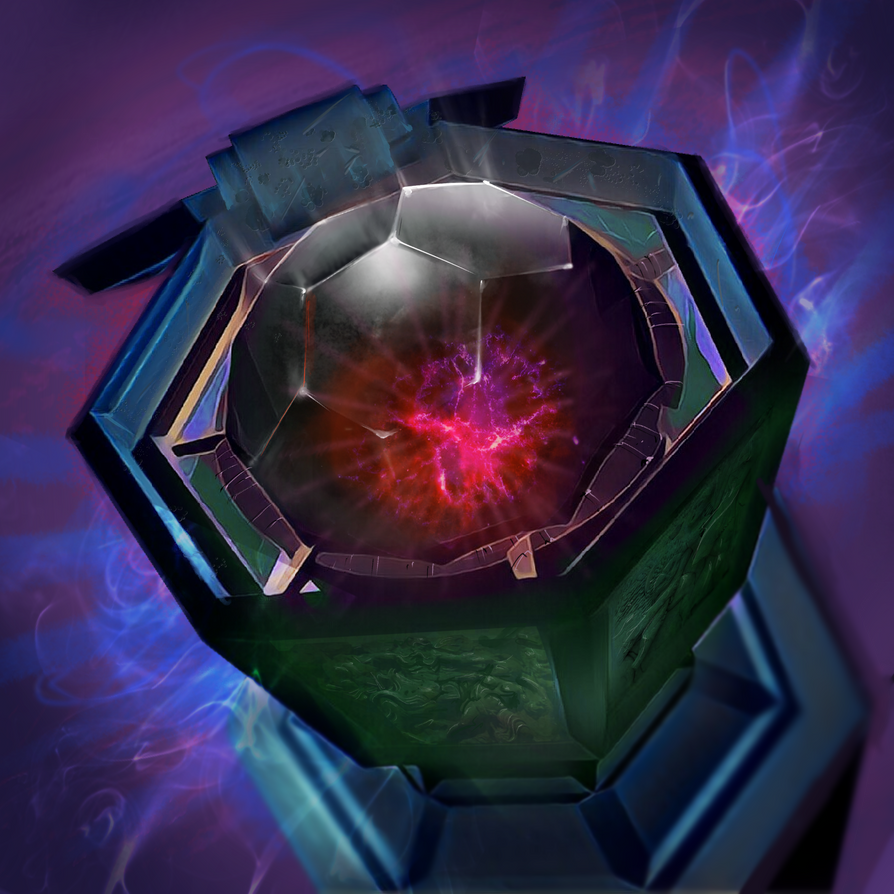
The Star Stones are powerful artifacts whose origin is a source of speculation and superstition. Some say they were a gift from the gods. Some say they fell from the heavens. Some say they are the crystalline hearts of ancient immortal beings whose dreams created all things.
Nobody knows for sure where they came from but everything depends upon them. Each Star Stone is a gem or crystal the size of a man’s head, of a shape that is hard to define and which seems to contain too many angles and facets. Each shines with its own light that seems to come from within it and the shadows of which extend in unnatural ways that make no sense.

Stones of Sanctuary

OnionVolcanoArt – DeviantArt

Each Star Stone protects its surroundings from the chaos in the world. The city that houses a Star Stone is a sanctuary against the foul creatures of darkness that ravage in the unprotected wild areas. Dark magic cannot hold sway within the boundaries of Star Stone’s presence, and the worst abominations of malevolent nature cannot draw close to it.
The city that houses a Star Stone is a safer place than anywhere else in the land of Atar. Such a place can grow and prosper, and people can dwell there in a state of relative security. The further one gets from the Star Stone the weaker its protection grows but even the borders of a city state are safer than the lands further out. Towns, villages, farms and mines can grow up in these outskirts with less immediate danger than otherwise.
This is a world where there is not a single frontier but rather a number of perimeters around the cities of the Star Stones. When people must travel – merchants, explorers, people seeking work or adventure – they find the way hard and dangerous and there is always a need for protection from the threats that lurk in deep woods or endless plains, trackless mountains and haunted marshes.

Cities of the Star Stones

Forgate – The Harbour City – bulwark of trade including sea trade. Beyond the Star Stone’s reach there are ocean dwelling fish men and great aquatic monsters.

Newholt – The northernmost keep – a doughty sanctuary far to the north of the land where the hardy come to make their home and stake their claims in the unexplored lands beyond

Kargun – The Fortress of Warlord Anmusta – a well fortified city built in the shadow of a citadel. The Warlord keeps his people safe but rules with an iron fist.

Larys – City of Shadows – ruled over by a mysterious cabal of sorcerers and repository of arcane lore sought out by many. The city also has a thriving criminal underworld and maintains a good market for smugglers which causes tension with Forgate.

Denizens of Atar

Humans represent the forces of order and it is they who have built the cities in which the Star Stones are housed.
Dwarves exist in small communities, usually family groups, in caves and other remote places. They are reclusive beings with great skill in crafting and forging artifacts of power. They are not just short viking alcoholics, they are magical beings of earth and stone and metal whose ways are not comprehensible to mankind. Resembling short and often twisted men (no women have been seen) each has some distinctive physical feature such as a single eye, a hunched back, a mouth in their belly and so on.
Elves are immortal spirits of nature made flesh, beings of supernatural substance who sometimes, for reasons unknown even to themselves choose to take on a humanlike form for a period. They appear like shorter, slighter, more beautiful interpretations of humankind and they retain their affinity with the natural world, finding human settlements crowded and oppressive. They have a deep understanding of the magic of nature and sometimes their memories of previous lives can surface in an unpredictable manner allowing them to ‘recall’ encounters from centuries before.
Orcs are violent beast-men and some scholars suggest that they are literally twisted parodies of the worst of humankind’s aggressive and territorial natures. They seem to have no community or culture beyond the war band and the raiding party and nobody has yet seen a female orc or an infant. One dark rumour suggests that they defile the fallen bodies of their foes and from that dark remnant a new Orc will rise to join the endless battles. They will kill without mercy and spread without restraint if they are not stopped wherever they are met.

(PRETTIED UP PDF HERE)

Gaming

Sorcerous Sigils

Being a treatment of the art of magic for sorcerers and their ilk for Lamentations of the Flame Princess and similar old school games – in short some House Rules that suit my style of play a little better.

Yoshitaka Amano

Spellbooks
Each sorcerer maintains a spellbook which is a working journal containing the details of the spells he or she knows. Each spell consists of a complex geometric form or sigil that the caster must visualise as he or she reinforces the form with gesture and spoken incantation.
If the spellbook is lost or destroyed the sorcerer can recreate it but this will take time – one 8 hour workday per spell per level.

Studying

The sorcerer must revise from the spellbook for at least an hour each day, practising forming the sigils. If the sorcerer is not able to do this – either because of time constraints or the lack of access to their spellbook – then spellcasting becomes a greater effort for them. They can cast only half the normal number of spells per spell level each day until this situation is remedied.

Memorisation

There is no need for a sorcerer to memorise specific spells for the day ahead. They are assumed to be familiar with all the spells in their spellbook and can cast them as required – assuming they have enough spell slots available.

Spell Slots and Vita

The spell slots available to a sorcerer relate to the amount of magic essence or vita they have access to, and more experienced sorcerers can use theirs more efficiently, reflected by the greater number of spell slots available
A higher level spell slot can be expended to cast a lower level spell with the excess vita being lost. Burning lower level spell slots to cast a higher level spell is possible but it will take a total of spell slots equal to the level of the spell being cast plus one.

Scrolls
Scrolls containing one or more sorcerous spells can be used in two ways. Either the sorcerer can transcribe the details of the spell they contain into his or her spellbook and thus add it to their known spells, or the vita contained within the scroll can be expended along the channels of magic created by the creator of the scroll and casting the spell (or one of the spells) written thereon. Once a spell is cast from the scroll in this way the details fade forever from the scroll.
If a sorcerer is in dire need and has a scroll available they can draw the vita from it to use for their own spells. If this happens all the spells on the scroll vanish at once but the sorcerer can use the vita in it as though it was a spell slot equal to the total levels of the spells written thereon minus one (so if the spell contains 2x 2nd level spells, it could be used up to give the caster a single 3rd level slot).

Other Sources of Vita

Some items can be enchanted to hold vita either one a one use basis or reusable. An enchanted gem in a necklace for instance may hold a pool of six spell slots that can be used by a sorcerer at will until they are used up. Alternatively the gem may hold a single level one spell slot but this replenishes each day at dawn.
Evil sorcerers may find that acts of abominable cruelty and sacrifice release vita in their commission which explains why they resort to such horrors to power their dread rites.

(Here is a prettied up pdf version)

Fiction

Hey, you. Yes, you!

Hey.

I’m sending you an image.   It will reach you somehow.

You’ve been unresponsive since we got you back from the enemy, but the doctors say your mind is active in a  dream prison they made for you.  A life so real you can’t escape it.    Reasons to stay there.  

I don’t know what dream it is but my words have to reach you. 

Maybe you’ll hear them, or read them in a book. 

Maybe on a screen.

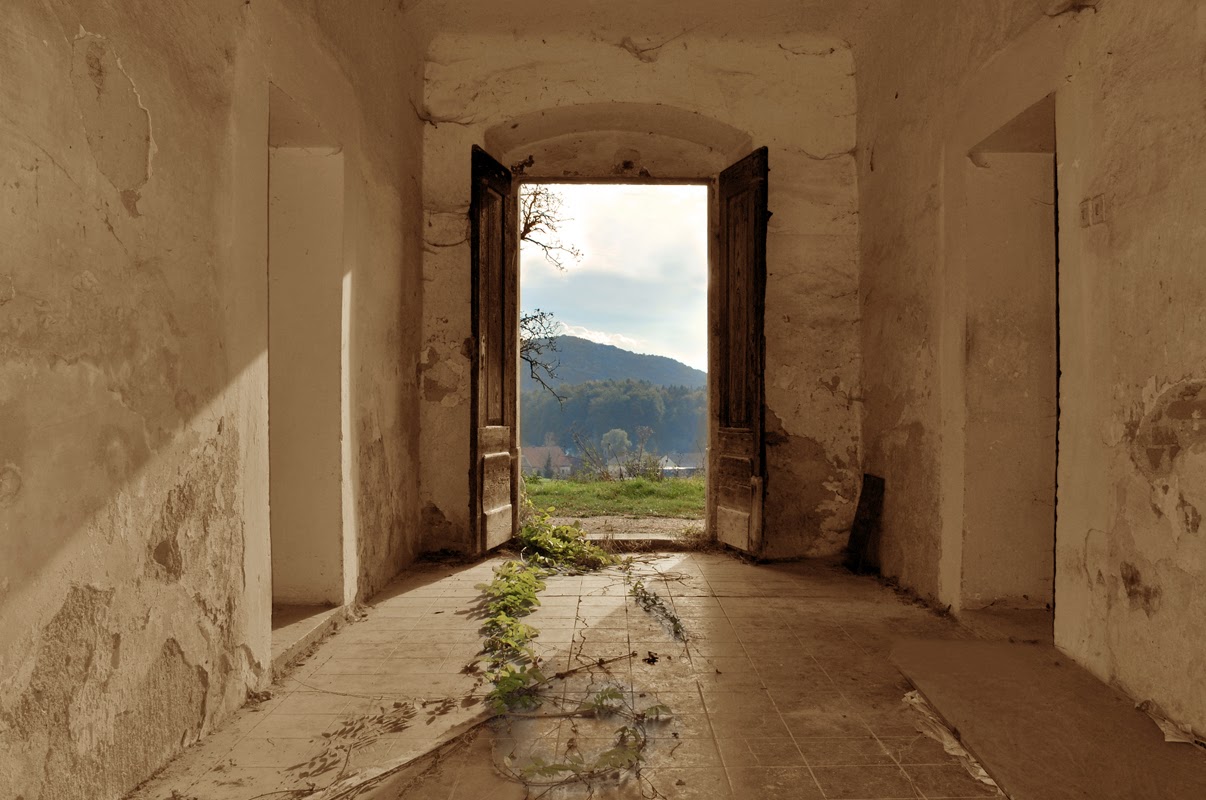
You have to walk through the door to wake up.  The door in the image.

Please.  Do it now.