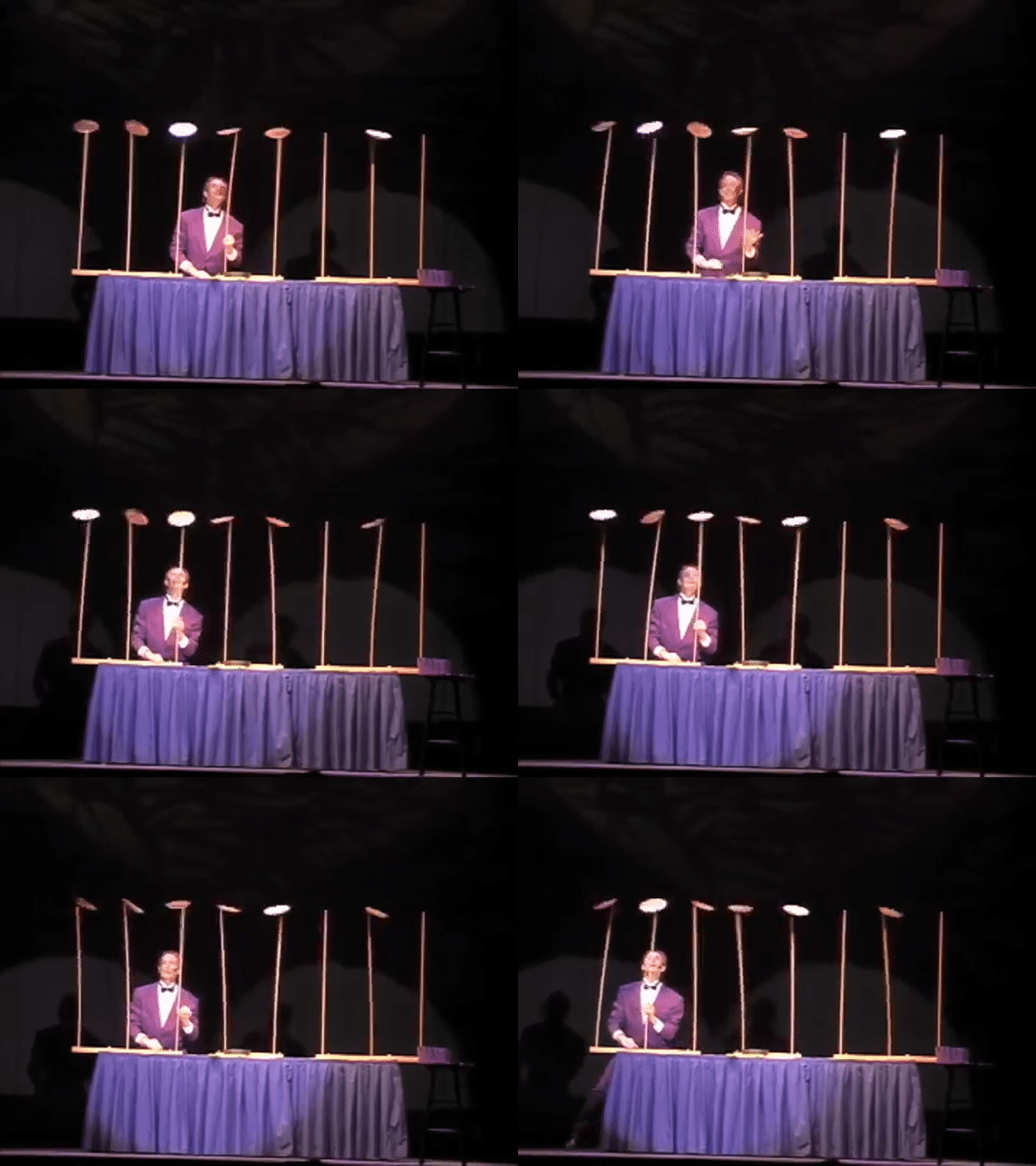
I’m currently running on a weekly or bi-weekly basis: a 10 year old Fantasy Homebrew, a Star Wars Homebrew, Liminal urban fantasy, and Blades in the Dark (In a homebrew setting). It’s a lot of plates to keep spinning, so I’ve put a lot of thought into how I do it.
Over the years my game prep has become fairly consistent, even when the games change. There are things I reliably prepare. I make sure I know who matters in the situation and what they want. I think about where the pressure points are, who is likely to be watching, and what might happen if nothing changes. I often jot down a handful of details that can be dropped into play when needed. Names, locations, rumours, or small complications that can surface if things start to stall.
What I’ve learned not to prepare is just as important for my GMing style. I don’t plan plots. I don’t decide how a situation should resolve. I avoid writing down solutions, twists, or endings. If I find myself thinking too far ahead, I usually stop. It’s partly because prepping too much can make a GM too keen on a particular outcome or version of events that can lead, however slightly, toward railroading, and it’s partly because I fully expect my players to find things in there that interest them more than others and I want to be save myself the work of preparing loads of material that may not get used.
I assume that players will make decisions I did not anticipate. I expect them to push on things I thought were background and ignore things I assumed were central. Prep, for me, is about being ready to respond to that rather than steering it.
I also don’t spend much time preparing mechanical outcomes. I trust the system (usually a Frankensteined together homebrew that I know inside out) to handle resolution when it matters. What I care about more is knowing what failure might cost, and who will be affected when things go wrong.
If I’ve done my prep properly, I know enough to keep the pressure on without knowing where it will land. The session does not need a shape in advance. It needs space for choices to matter, and room for consequences to follow.
Also key to this style is that when a session ends, particularly if it’s at some kind of obvious pause in the narrative I always ask the players what their characters plan to do next. If they decide they all want to go explore the Dreaded Temple of Farb, or that they intend to host a midnight feast in the abandoned West Wing, or they are planning to steal a consignment of luxury goods intended for the Inner Party (I run a variety of genres, those are not all from one campaign, although frankly combining sword & sorcery, boarding school adventures and 1984 would be tremendous) then I know I only need to prep more detail for the things they’re actually going to be doing. It saves a lot of work, keeps me fresh, and I still have the sketched in details ready to help me if they suddenly decide on the day to do something different (Forget the temple we’re becoming pirates, we’re going to sneak into the village and have a picnic, we’re going to inform on our allies and become Thought Police snitches).
I don’t know whether this method of prepping would work for a new GM to be honest. It requires a certain amount of confidence in being able to take basic background prep and improvise convincingly around it and in the right genre-feel way. When I was younger (so much younger than today) I did tend to plot out scenes and story flow in more detail. Nowadays that would seem like a lot of work, and very restrictive… so much effort into subtly trying to guide things to “the next scene”. It also requires a game system that doesn’t need exhaustively statted out NPCs and foes (though I suppose a GM could have a folder full of them ready to slot in). For me and my groups though it seems to work fine.
Discover more from Otherworlds
Subscribe to get the latest posts sent to your email.
 Otherworlds